
Eastern North Carolina
Driveway Culverts and Stone Headwalls
Driveway culverts carry ditch and stormwater beneath an entrance. Headwalls and wingwalls can retain surrounding fill, protect the opening, reduce erosion exposure, and give the entrance a finished appearance.
Request an Estimate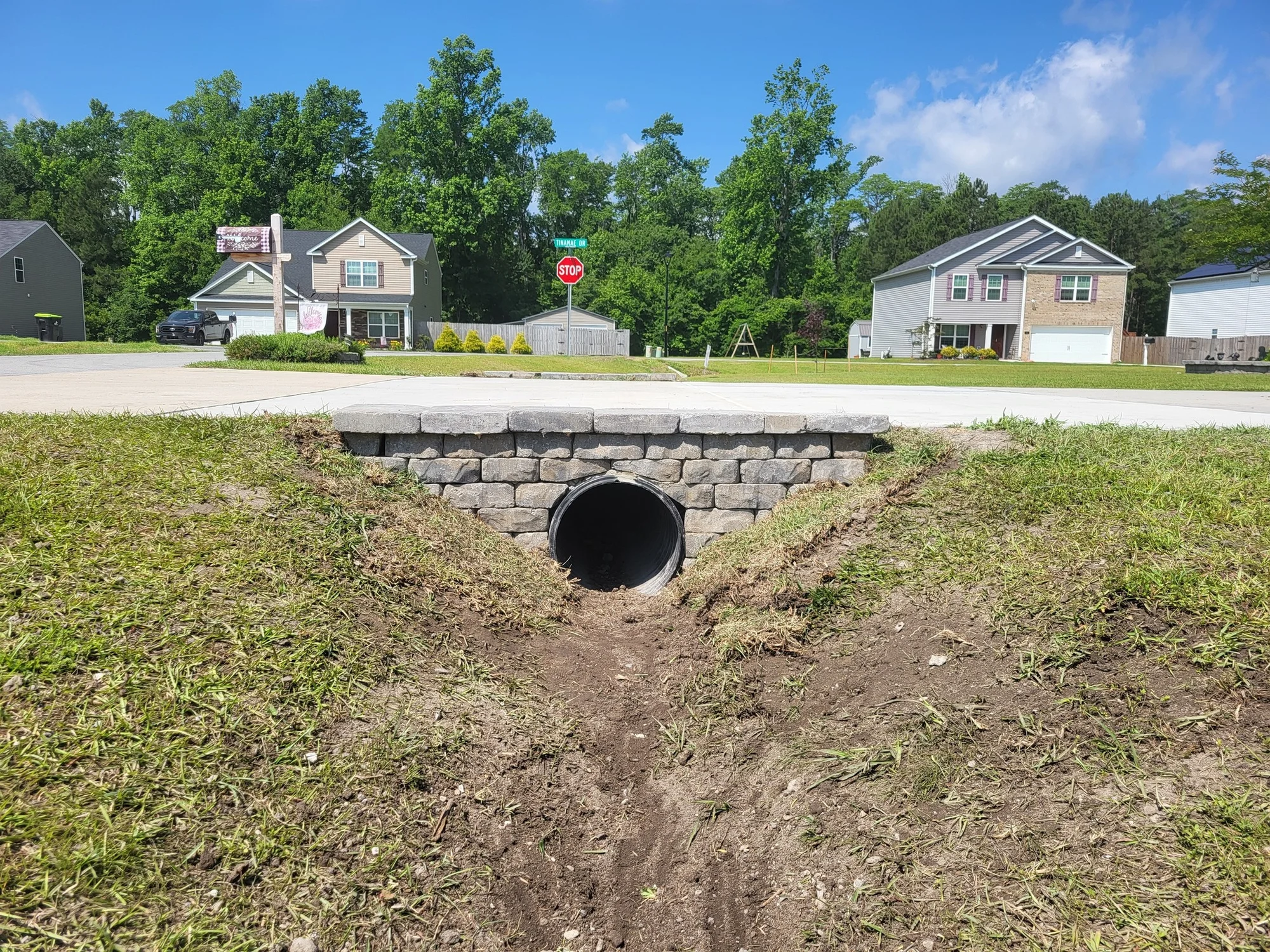
What the site review should cover
Project scopes can include
Final recommendations depend on the condition, access, site, and intended use.
What shapes the recommendation.
Confirm hydraulic function first
A decorative headwall cannot correct a damaged, undersized, poorly aligned, or improperly graded culvert.
Stabilize the crossing
Pipe support, backfill placement, compaction, cover, and the transition to the drive are planned together.
Finish and protect the opening
Headwalls, wingwalls, and outlet protection are fitted to the site after the drainage path is established.
Common questions about culverts.
What does a stone headwall do?
It finishes and stabilizes the area around a culvert opening and can help protect adjacent fill from erosion.
Can a headwall be added to an existing pipe?
Sometimes, but the pipe condition, size, alignment, cover, and drainage performance should be reviewed first.
Who determines the culvert size?
Sizing depends on expected flow and site conditions. Work in a public right-of-way may also require NCDOT or local approval.
Can erosion at the outlet be repaired?
Outlet protection can be included, but the cause of the erosion must also be addressed.
Talk through your culverts project.
Share the property location and what you want repaired, replaced, or newly installed.