
A Practical Concrete Driveway Planning Guide
The site, base, drainage, joints, finish, and curing questions worth resolving before a driveway is placed.
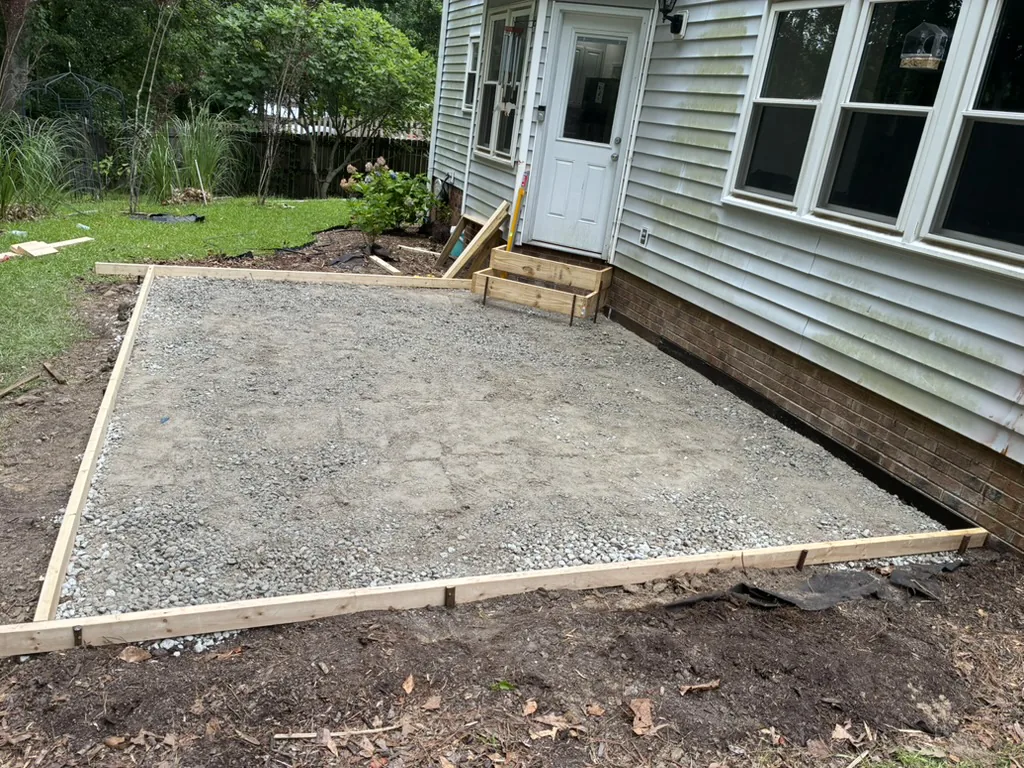
Plan around use and drainage
The driveway should account for vehicle paths, parking, garage transitions, existing walks, nearby grades, and where rainwater can move without creating a new problem.
Drainage planning is especially important in low-relief parts of Eastern North Carolina where water may leave a site slowly.
Uniform support starts below the slab
Soft areas, disturbed soil, roots, and inconsistent base thickness can create uneven support. Firm-looking ground is not a substitute for the prepared base specified for the project.
The written scope should also say whether old concrete, unsuitable material, and excess soil are removed from the property.
Joints and curing are part of the work
Concrete naturally changes volume as it hardens. Planned joints encourage shrinkage cracks to form in intended locations.
Curing protects the moisture and temperature conditions that concrete needs to develop strength. Walking and vehicle timing should come from the mix, weather, slab, and expected load on the actual project.