
Why Retaining Wall Drainage Is Site-Specific
A homeowner-friendly look at runoff, backfill, outlets, reinforcement, and the loads a wall may need to support.
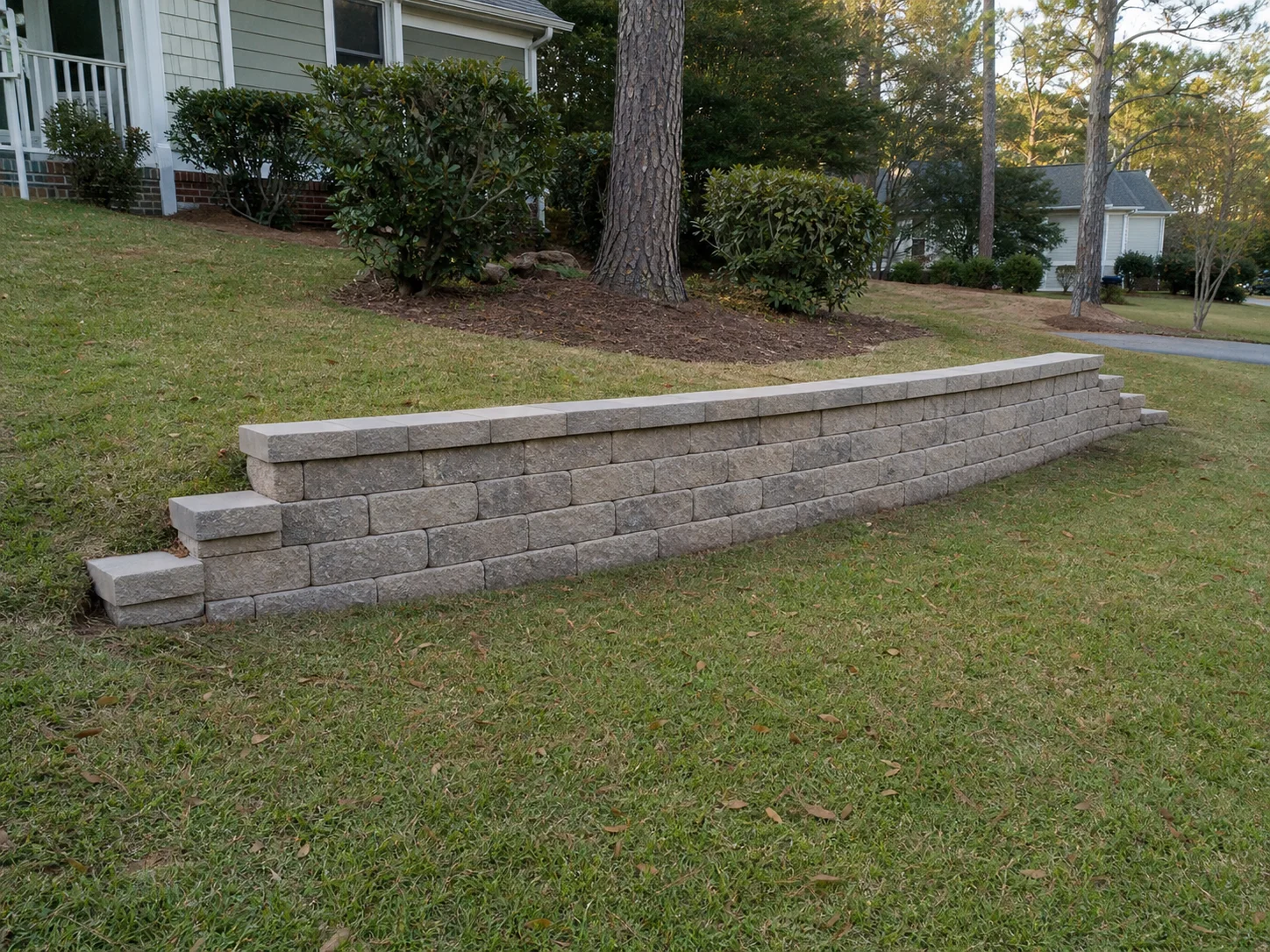
A wall changes how water moves
A retaining wall interrupts the natural path of surface and subsurface water. The site plan should identify where that water comes from and a stable place for it to discharge.
Drainage material behind a wall can manage incidental water. It should not become the main route for uncontrolled roof, driveway, or uphill runoff.
Height is only one design factor
Soil, slope, groundwater, wall geometry, nearby structures, and vehicle loads can matter as much as visible height.
Local permit and engineering requirements apply. Walls supporting driveways, buildings, steep slopes, or other surcharge loads may need professional design.
Repair the cause of movement
Leaning, bulging, separated units, erosion, and recurring cracks are symptoms. A lasting repair depends on the base, drainage, backfill, reinforcement, and site water that caused the movement.